

Greetings!
As a new year unfolds, moments both sobering and celebratory remind us why a thoughtful, integrated approach to life and wealth matters so deeply.
In today’s Wealth Advisory, we examine the surprising detention of Venezuela’s long-time leader and the ripple effects such a geopolitical shock could have on global markets—especially through energy prices. We’ll place the headlines in historical context and share why disciplined, long-term investors are often rewarded for perspective rather than prediction.
Next, our Wellness Navigator, Christine Despres, then turns the spotlight inward, exploring the quiet revolution taking place in brain health. New research is reshaping what we thought we knew about aging, cognition, and energy, revealing that neuroplasticity and daily micro-habits may hold the key to clearer thinking, greater vitality, and a healthier future—at any age.
And in Etcetera, we celebrate a moment that transcends balance sheets and brain scans: Montana State’s unforgettable overtime victory to capture the FCS National Championship. It’s a story of resilience, teamwork, and belief—qualities that resonate far beyond the football field and remind us what’s possible when preparation meets purpose.
Thank you for reading, for your trust, and for allowing us to walk alongside you in the pursuit of a good life—one shaped by wisdom, health, perspective, and joy.
Wealth Advisory: How the Venezuela Situation Could Affect Your Portfolio
The detention of Venezuelan leader Nicolás Maduro by United States military personnel marks a notable and surprising development on the global stage. Media outlets have extensively covered how U.S. armed forces carried out this operation, apprehending Maduro on allegations involving narcotics distribution and financial misconduct. In subsequent remarks to the press, President Trump indicated that America would assume control of Venezuela and pursue expanded petroleum output from the nation.
Though the most critical considerations involve the welfare of Venezuelan citizens and broader regional consequences, market participants understandably seek clarity on how these developments might influence their investment holdings. This situation prompts numerous questions regarding America’s future involvement in Latin America, prospects for free elections in Venezuela, implications for illegal drug networks, potential increases in petroleum supply, and shifting dynamics with nations such as Iran and China.
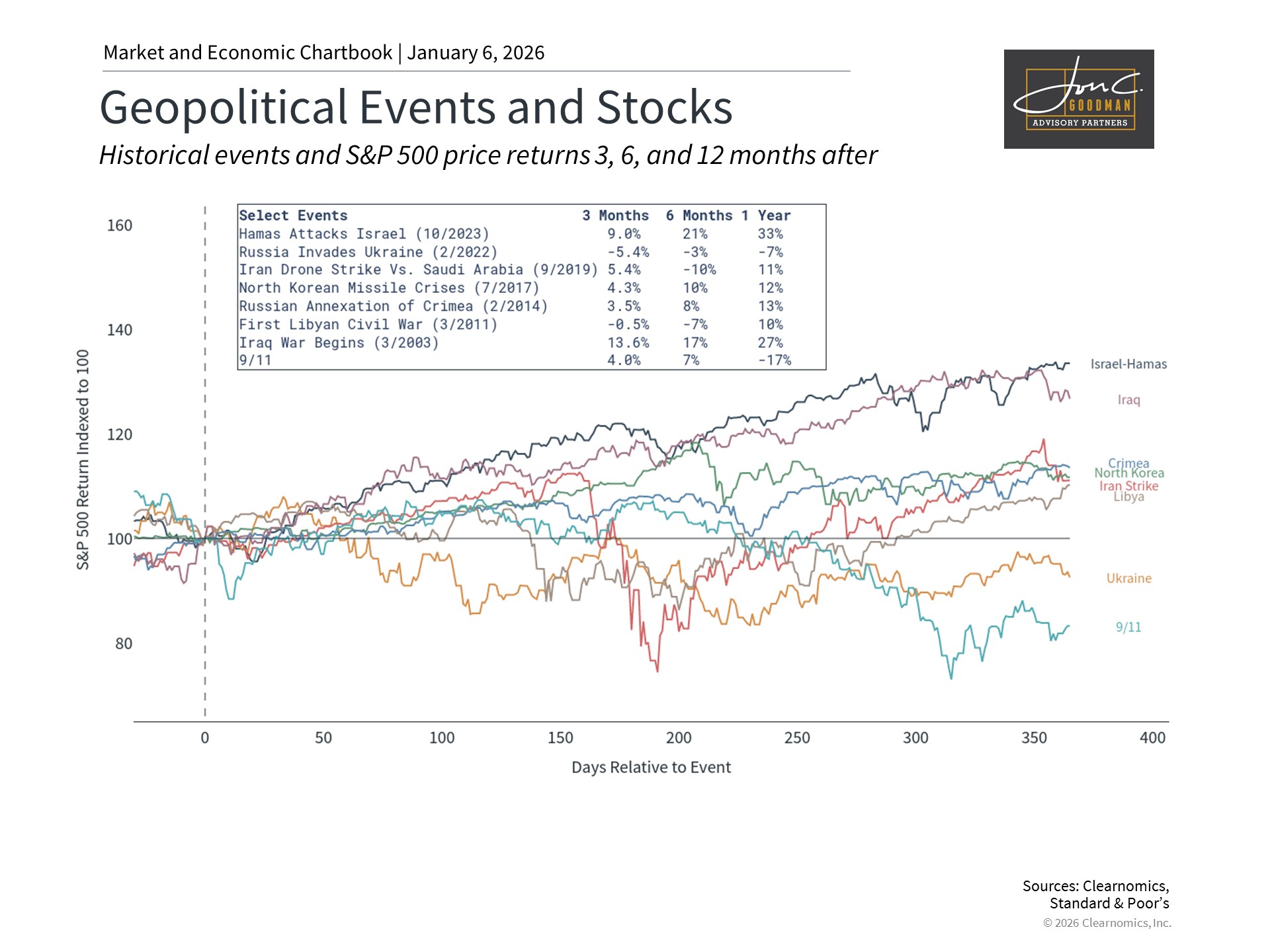
Looking at historical precedent offers valuable insight: geopolitical disruptions frequently generate near-term market turbulence, yet their lasting influence on markets typically remains constrained. These events generally don’t alter the trajectory of fundamental economic forces and market trends, even when energy production faces disruption. Recent conflicts in Ukraine and the Middle East have demonstrated this pattern clearly. Recognizing this historical tendency helps investors keep proper perspective while concentrating on elements that have traditionally influenced market returns over time.
Looking back at U.S. regional involvement
Understanding America’s historical engagement in Latin America provides essential background, as debates surrounding U.S. actions in Venezuela encompass diverse subjects from global legal frameworks to territorial stability. The Monroe Doctrine, originally proclaimed by President James Monroe in 1823, declared that European nations should refrain from meddling in Western Hemisphere affairs. When applied to current circumstances, this doctrine implies South America falls within America’s sphere of influence, meaning any antagonistic actions there would be interpreted as directed against the United States. President Trump has invoked this concept, recently characterizing his international policy approach as the “Don-roe Doctrine.”
American intervention in Latin American nations has occurred multiple times throughout history. For instance, U.S. forces apprehended Manuel Noriega in Panama exactly 36 years earlier, in 1990, also on drug-related charges. Although the recent Venezuelan operation came as a surprise to many, Maduro has faced indictment from the U.S. Department of Justice since 2020 for narco-terrorism and trafficking offenses. The Biden administration enforced sanctions against Venezuela and, during early 2025, established a $25 million reward for Maduro’s capture, subsequently increased to $50 million under the Trump administration.
Similar to other American military and judicial operations, multiple interconnected goals exist. The official justification centered on combating narco-terrorism, the charge leveled against Maduro and 14 other Venezuelan officials in 2020 by U.S. authorities. The widespread international view that Maduro’s government lacks legitimacy, stemming from the country’s 2024 electoral process, reinforces this rationale. Before the administrations of Maduro and Hugo Chávez, Venezuela functioned as a democracy and ranked among the region’s most prosperous nations.
For those investing with extended time horizons, the crucial takeaway is that geopolitical uncertainty represents a standard element of market participation, despite varying specific details each time. These developments may also seem particularly troubling because they diverge from typical business coverage about company profits and economic indicators. The chart displayed above showcases numerous major geopolitical incidents spanning recent decades. In the majority of instances, markets rebounded within several weeks or months, if they experienced any disruption whatsoever.
Petroleum prices link global events to investment markets
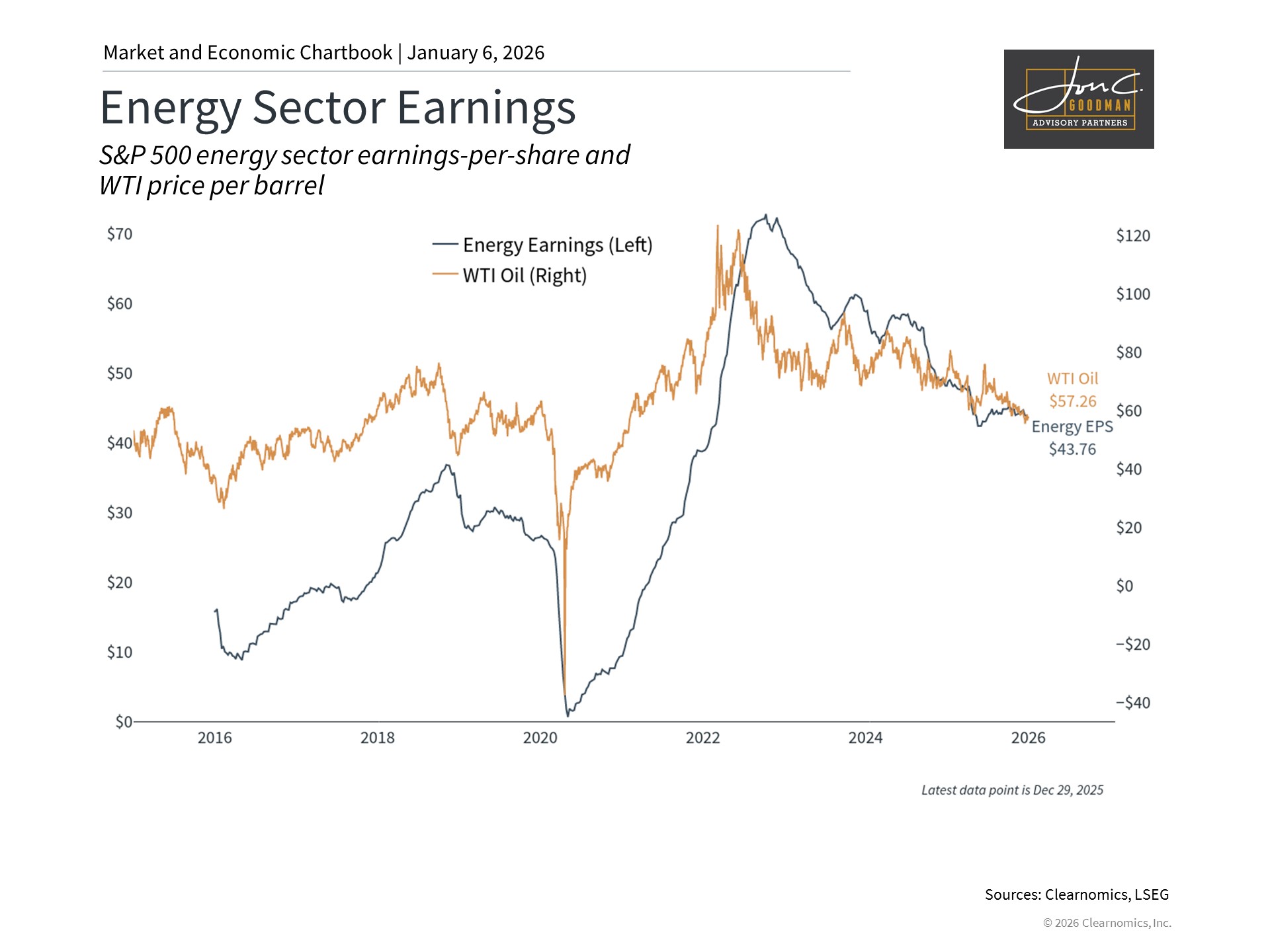
From an investment standpoint, the influence on petroleum markets may prove most significant. This stems from the fact that commodity pricing represents the principal mechanism through which geopolitical developments impact financial markets, with oil maintaining its central position in worldwide economic activity. Venezuela holds importance here given that the nation controls the globe’s largest confirmed petroleum reserves at roughly 304 billion barrels, per the U.S. Energy Information Administration. For context, this surpasses even Saudi Arabia’s 267 billion barrels.
Notwithstanding these enormous reserves, Venezuela’s actual oil output trails many other nations significantly. Venezuelan petroleum production has experienced dramatic deterioration over the last twenty years due to poor governance, insufficient infrastructure investment, and economic sanctions. Current production has dropped below 1 million barrels daily, contrasting sharply with U.S. output approaching 14 million.1 Should Venezuelan production expand, substantial time and capital investment will likely be required before meaningfully contributing to worldwide supply. This reduces any immediate market impact.
Looking ahead, American energy corporations might find opportunities to expand their access to these reserves, though lower petroleum prices resulting from enhanced supply could partially counterbalance this benefit. For the overall economy and everyday consumers, any market disruption could prove beneficial since expanded Venezuelan output would exert downward pressure on oil costs over time. This distinguishes it from other conflicts like Russia’s 2022 invasion of Ukraine, which interrupted existing supply chains and pushed oil to nearly $128 per barrel. That scenario intensified post-pandemic inflation and drove average U.S. gasoline prices beyond $5 per gallon.
Present oil valuations remain well beneath those peak levels. Prices have actually stayed moderate throughout the past year, with WTI crude trading under $60 per barrel and Brent crude hovering around that threshold. According to available information, OPEC+ countries’ immediate reaction to recent Venezuelan developments has been maintaining current production targets, indicating they’re observing the situation before implementing strategic changes. The fact that America now leads global oil and gas production helps further diminish domestic economic impact.
Nevertheless, it’s worth noting that energy price forecasting remains challenging, and America continues relying on crude imports. Following Russia’s Ukraine invasion, many analysts anticipated indefinitely elevated oil and natural gas prices, particularly given predictions of severe European winter conditions. Yet prices stabilized and declined much sooner than most projections suggested. This serves as a reminder that, because oil trades as a global commodity, numerous factors can unexpectedly influence pricing.
Limited financial market presence for Venezuela
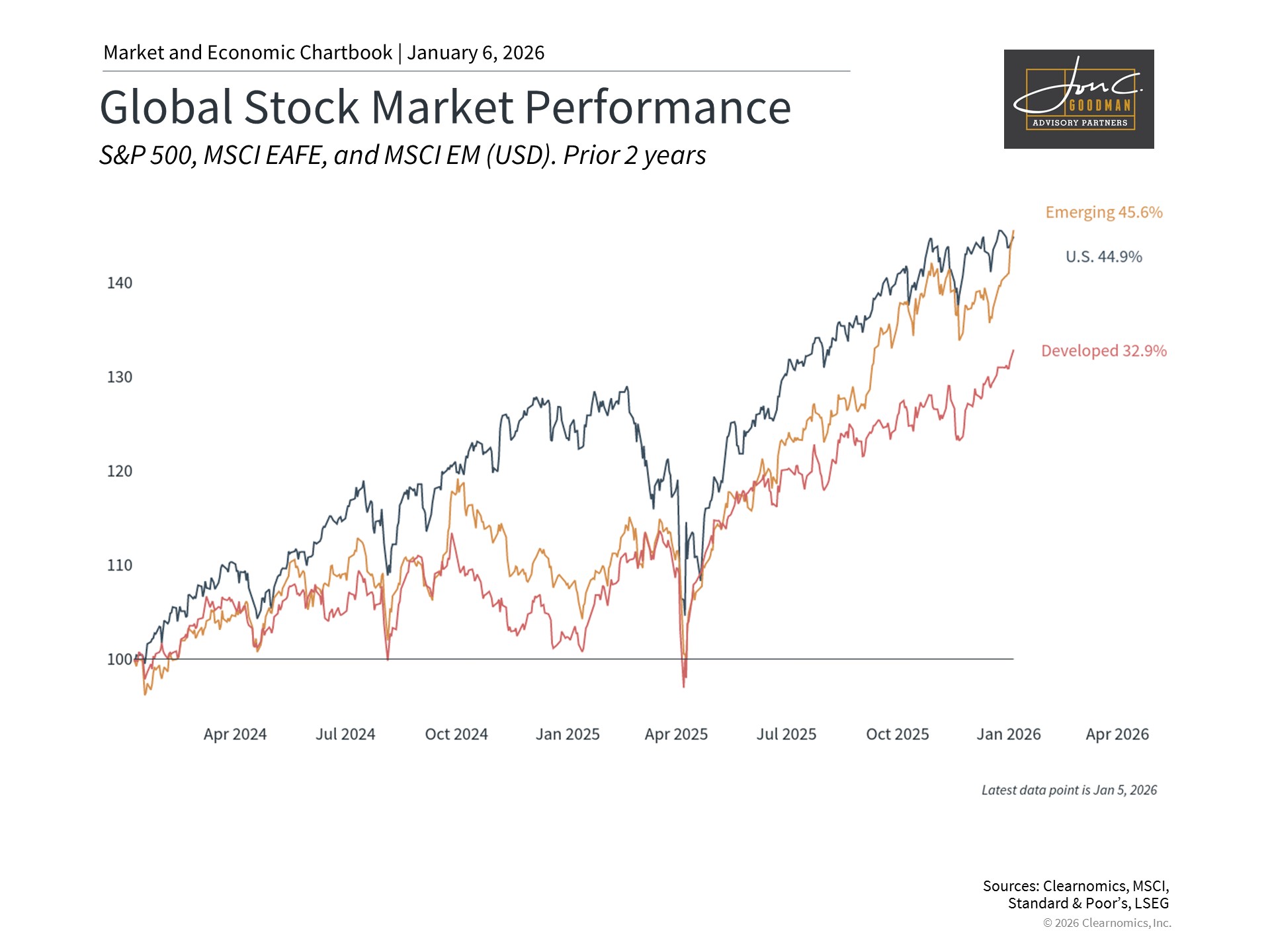
An additional important consideration for investors is Venezuela’s negligible presence in worldwide financial markets. The Bolsa de Valores de Caracas, Venezuela’s stock exchange, remains small with limited trading activity and minimal international investor participation. It lacks inclusion in the MSCI Emerging Markets Index, meaning most global investors maintain little to no direct holdings in Venezuelan equities. The nation’s economic deterioration throughout the past decade has essentially removed it from emerging market investment portfolios.
Regarding fixed income markets, Venezuela has remained in default since 2017 following missed debt payments. Bondholders have pursued restructuring negotiations, though the bonds trade at substantially depressed valuations reflecting anticipated considerable losses.
The Venezuelan situation will continue developing, potentially generating additional events that draw market focus. Indirect consequences through oil pricing and general uncertainty will probably exceed any direct impacts from the country itself and its equity markets. Instead of attempting to forecast precisely how circumstances might unfold, investors should concentrate on ensuring their portfolios align with their financial objectives.
The bottom line? The detention of Venezuela’s leader constitutes a major geopolitical event with important humanitarian and regional consequences. Historical evidence demonstrates that investment portfolios constructed around long-term financial objectives can successfully weather geopolitical uncertainty.
References
1. https://www.eia.gov/outlooks/steo/tables/pdf/3dtab.pdf

Wellness Navigator and Holistic Health Coach, Christine Despres
The Brain Health Revolution Is Here—And 2026 Is Your Year
For decades, we were told our brains were fixed—that cognitive decline was inevitable, that once brain cells were gone, they were gone forever. That was wrong.
The science is now crystal clear: brain cells can regenerate throughout our lifetimes, and we can change our brain circuitry through neuroplasticity—the brain’s remarkable ability to rewire, heal, and strengthen itself at any age.
As CNN’s Dr. Sanjay Gupta explains, “We’re seeing evidence that lifestyle changes can significantly improve brain health and even reverse brain disease.” And Dr. Daniel Amen, who has completed over 250,000 brain scans, puts it simply: “You’re not stuck with the brain you have. You can make it better.”
Why brain health is everywhere right now
And here’s the thing: the brain health market is exploding. It was $10.95 billion in 2024 and is projected to reach $23.52 billion by 2030. Grand View Research Why? Because over 55% of people aged 30-65 report at least one cognitive concern—memory lapses, reduced focus, brain fog. People are finally realizing that brain health isn’t separate from your overall health—it IS your health.
Your brain controls everything: your energy, your metabolism, your mood, your memory, your ability to lose weight, your hormone balance, your inflammation levels and your quality of life as you age. So why not start there?
The midlife brain health opportunity
Here’s what makes this moment so powerful for women in midlife: your brain is not in decline. It’s in transformation. ( And men too.) The hormonal shifts, the metabolic changes, the way everything suddenly feels harder after 40—this isn’t your body breaking down. It’s your brain signaling that it needs different support now.
Take my 2 minute Brain Health Quiz– Why Does Everything Feel Harder After 40?
What this means for you
People come to me exhausted, foggy, frustrated that “nothing works anymore.” They’ve tried diets, supplements, more exercise. Some things help a little. Nothing transforms or lasts.
Why? Because they’re treating symptoms instead of addressing the root cause: brain health.
When your brain is inflamed and stuck in survival mode, your metabolism slows, your energy crashes, your focus fragments and your hormones get dysregulated. But when you support your brain with what it actually needs, everything has the opportunity to rebalance.
Top micro-habits creating inflammation in your brain
Research shows that the small, daily micro-habits you repeat are either healing your brain or harming it. These seemingly innocent daily behaviors are silently destroying your midlife brain:
Starting your day with your phone creates an instant cortisol spike that primes 12 hours of stress.
- Skipping protein at breakfast triggers a cortisol response that creates brain fog and cravings by mid-morning.
- Adding sweetener to your morning coffee disrupts your gut microbiome and spikes blood sugar first thing.
- Drinking coffee before water compounds dehydration, fatigue, and cortisol dysregulation.
- Sitting more than 6 hours daily reduces blood flow to your brain and increases mortality risk.
- Using caffeine to push through afternoon fatigue masks exhaustion without fixing it and teaches your adrenals to work overtime.
- Sitting down immediately after dinner slows digestion, prolongs blood sugar spikes and prevents proper nutrient processing.
- Ignoring micro-stressors like clutter, notifications and noisy environments creates what researchers call “invisible stress loads.”
- Not going outside before noon disrupts your circadian rhythm, affecting sleep, hormones, and mood. And ending your day with digital stimulation reduces deep sleep by up to 60%.
These micro-moments create what Harvard researchers call “invisible stress loads”—chronic, low-grade inflammation that becomes the brain fog and fatigue you’re experiencing. So let’s start the new year off by learning to avoid the habits that harm it. Then the good habits we introduce will be even more effective. Sound like a plan?
Ready to transform your brain health?
Book a complimentary 30 minute Strategy Session to assess your specific health concerns and discover if personalized brain health coaching is right for you.
Book here: FREE >Brain Strategy Session
To your vibrant brain,
Christine,
The Wellness Navigator
Registered Nurse | Board-Certified Health & Wellness Coach | Holistic Brain Health Coach

On Monday night in Nashville, the Montana State Bobcats rewrote history with a gut-wrenching 35-34 overtime victory over the Illinois State Redbirds to capture the 2025-26 FCS National Championship — their first Division I title since 1984. The Bobcats built an early lead, saw it evaporate in the fourth quarter, and then prevailed in dramatic fashion when quarterback Justin Lamson found Taco Dowler in the end zone for the game-winning touchdown, with the successful extra point sealing the win in the first overtime in championship history.

Down 28-28 late in regulation, the Bobcats blocked a potential game-winning field goal, forcing overtime. Illinois State struck first in OT but missed the extra point. That opened the door for MSU, which answered with precision under pressure to lift the trophy in a classic that will be remembered among the most thrilling in FCS history.
For Montana State University and the city of Bozeman, the championship carries immense meaning. It ends a 41-year title drought, capping a season of resilience after an 0-2 start and a run that featured a historic rivalry win over the University of Montana and a perfect conference record.
The victory also elevates the Big Sky Conference, bringing a national title back to the league for the first time in over a decade. It underscores the strength and competitiveness of Big Sky football on the national stage, giving the conference a banner moment while igniting pride throughout Montana and beyond.
This is more than a win — it’s a statement game that will resonate in Bobcat Country for generations.
That’s all for today.
Here’s to a strong start to 2026!
