

Greetings!
This week’s Advice for the Good Life is about playing the long game—with our money, our health, and even the generations that come after us.
In today’s Wealth Advisory, we take on the Fed’s latest rate hike—and, more importantly, what it actually means for long-term investors. With inflation still running hot, oil hovering around $100 a barrel, and interest rates moving higher, it’s tempting to think we ought to do something. History offers a useful reminder: the Fed matters, but probably not nearly as much to your long-term success as staying invested, diversified, and focused on the things you can control.
Then, our Wellness Navigator Christine marks World Alzheimer’s Day with something more personal: three people she can’t stop thinking about—the person living with Alzheimer’s, the person caring for them, and the person quietly wondering, Could that someday be me? Her message is both compassionate and hopeful: what we do today can matter greatly to the health of our brains tomorrow.
And because three rounds are better than two, we’ve added a bonus Etcetera: why recent rule changes have made grandparent-owned 529 plans considerably more interesting. From financial-aid treatment to Roth IRA rollovers, there are some intriguing new ways grandparents can help fund an education—and perhaps leave a legacy that compounds well beyond dollars and cents.
Money. Health. Family. Legacy. Pretty good territory for one Tuesday.
As always, enjoy, share it with someone who might benefit, and subscribe if you haven’t already.
Here’s to the Good Life,

Wealth Advisory: What Fed Rate Hikes Mean for Your Long-Term Portfolio
Janet Yellen, the former Federal Reserve Chair, often said that “monetary policy is not a panacea.”1 Much like there is no cure for the common cold beyond letting it run its course and managing symptoms, the Fed’s tools are generally not designed to fix the root causes of economic problems. In theory, monetary policy is intended to help ease certain challenges, particularly those related to employment and inflation. In practice, however, the Fed does not directly control the economy. It responds to the economic environment as it evolves.
At present, the primary challenge is persistent inflation. This is largely attributable to elevated oil prices stemming from the ongoing conflict in Iran, which has prolonged the closure of the Strait of Hormuz and created broader instability in the region. The Fed, of course, has no direct tools to address these geopolitical dynamics through interest rate policy. What it can do is work to prevent inflation from spreading beyond energy prices into other categories that affect consumers and businesses more broadly. Understanding the Fed through this lens raises an important question for long-term investors: how should these developments inform portfolio decisions?
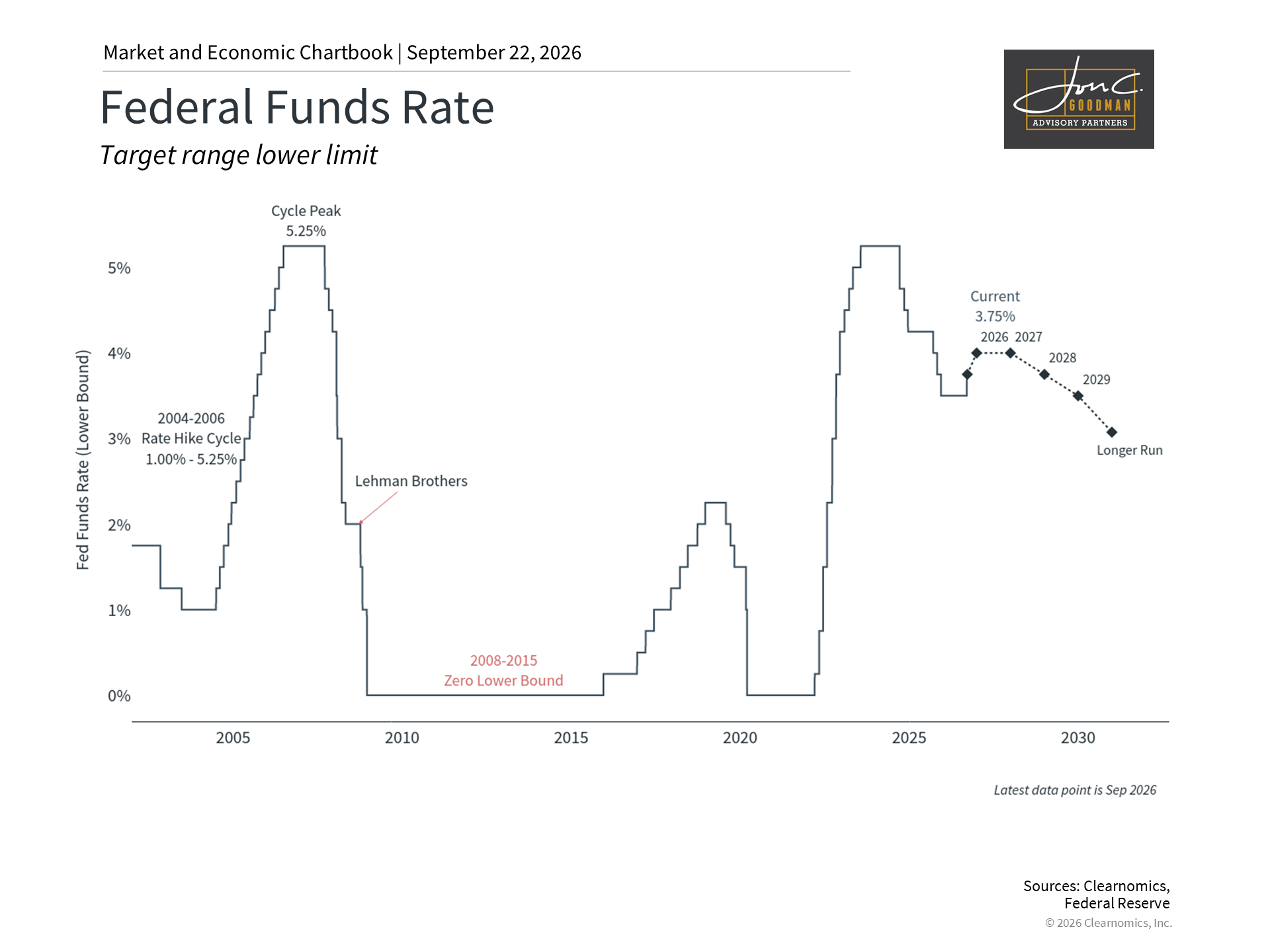
The Fed’s most recent rate hike came as little surprise to investors
At its September meeting, the Fed chose to raise policy rates by one-quarter of a percent, bringing the target range to 3.75% to 4.00%. This marked the first rate hike in three years, following a period of rate cuts that ran from September 2024 through December 2025. Because the decision was widely anticipated by investors, the market absorbed the announcement with only modest short-term volatility, ultimately taking the move in stride.2
What distinguishes this particular hike? The Fed is primarily responding to elevated energy costs, with oil prices still hovering around $100 per barrel. Economists often describe this as “cost-push inflation,” meaning that supply disruptions have driven prices higher. This stands in contrast to “demand-pull inflation,” which occurs when a robust economy generates excessive consumer demand that pushes prices upward.
In 2022, the economy experienced both dynamics simultaneously. Low interest rates and government stimulus contributed to demand-side inflation, while supply disruptions tied to the pandemic and Russia’s invasion of Ukraine created supply-side shocks. Typically, economists and policymakers regard supply-side shocks as temporary, since they tend to resolve over time. In the case of oil, prices did eventually decline before this year’s geopolitical developments reversed that trend.
Over the past several cycles, the Fed has favored a steady, well-communicated approach to policy changes. This practice, commonly known as “forward guidance,” was designed to provide clarity on the likely path of interest rates, particularly during periods of economic stress. New Fed Chair Kevin Warsh, however, prefers a different approach and has declined to submit his own forecasts to the Fed’s quarterly Summary of Economic Projections.3
His stated goal is for markets to respond to underlying economic data rather than anticipating what the Fed will do next. This approach is one reason investors assigned over a 90% probability to this rate hike ahead of the Fed meeting.4 Whatever one’s view on this methodology, it means that labor market conditions, inflation trends, and GDP growth figures carry even greater importance for understanding the broader environment. While inflation remains above many observers’ preferred levels, unemployment continues to be historically low, and economic growth has remained steady.
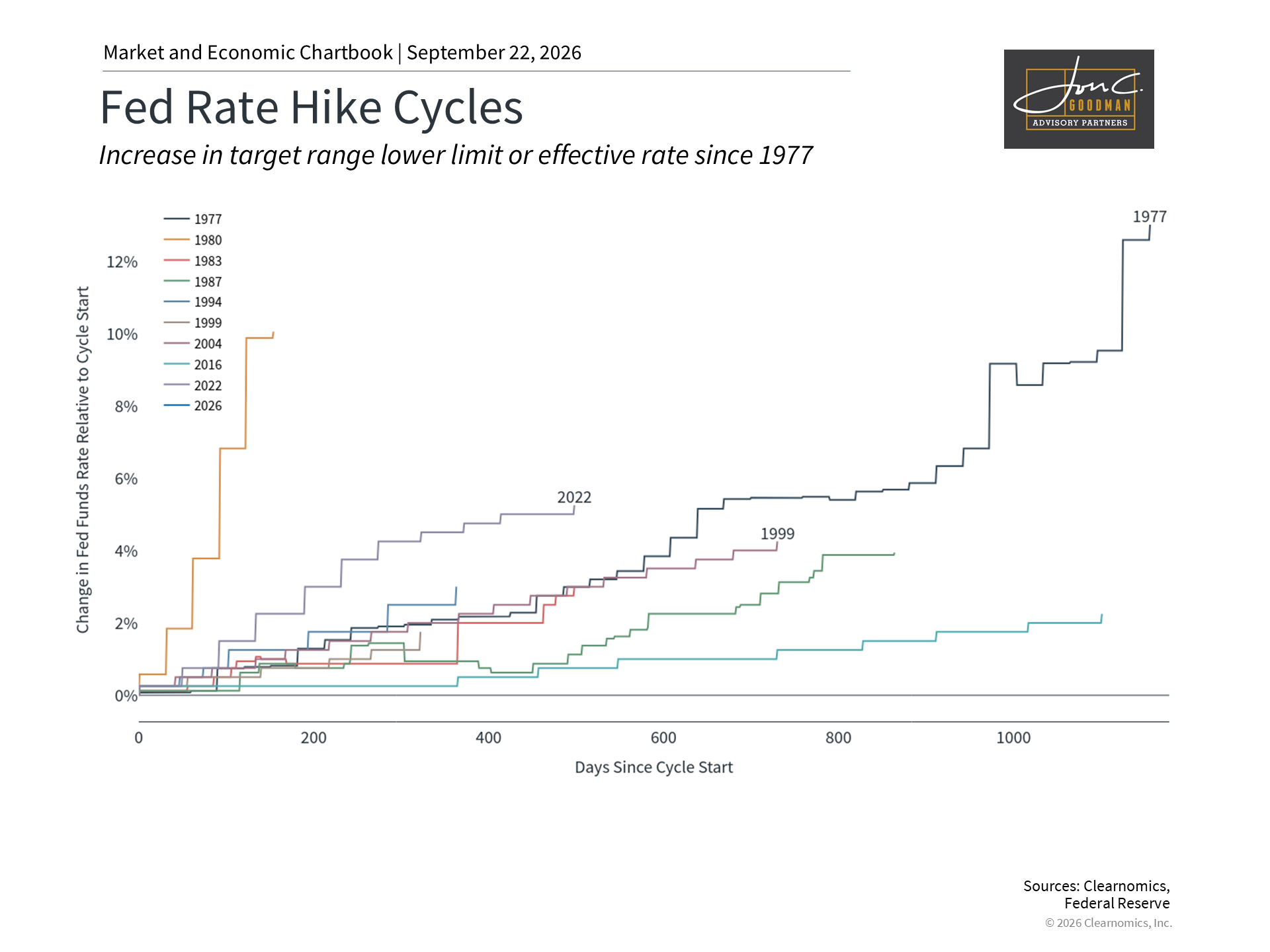
Rate hikes are a recurring feature of the economic cycle
The measured size of this hike, just 0.25%, reflects the Fed’s current posture. Projections from other Fed officials suggest the central bank may raise rates once more later this year before pausing through 2027, with only a gradual decline from that point onward. This represents a shift from the Fed’s June forecasts, which had anticipated lower rates. That said, these projections should be interpreted with appropriate caution, as they can shift meaningfully from one meeting to the next depending on how economic conditions evolve.
It is understandable that some investors associate higher interest rates with negative outcomes for markets. In reality, the relationship depends heavily on the reasons behind the rate increases. It is not uncommon for markets and interest rates to rise together, particularly in the later stages of a business cycle.
A growing economy paired with strong corporate earnings can support both rising equity prices and a Fed working to keep inflation in check. Over the past six months, major indices including the S&P 500, the Dow Jones Industrial Average, and the Nasdaq have all moved toward new all-time highs. This has been supported by strong corporate earnings and the continued buildout of AI data centers, even as interest rates have reached multi-decade highs.
There is also a common misconception that the Fed’s role is to fine-tune the economy with precision. This view was partly shaped by the Fed itself, particularly during Alan Greenspan’s tenure from the late 1980s through the mid-2000s, when the central bank’s decision-making process was relatively opaque. In practice, the Fed is more often reacting to events than it is proactively steering the economy. The chart above illustrates how rate hikes have unfolded across a wide range of economic environments, highlighting that these policy moves tend to play out over extended cycles.
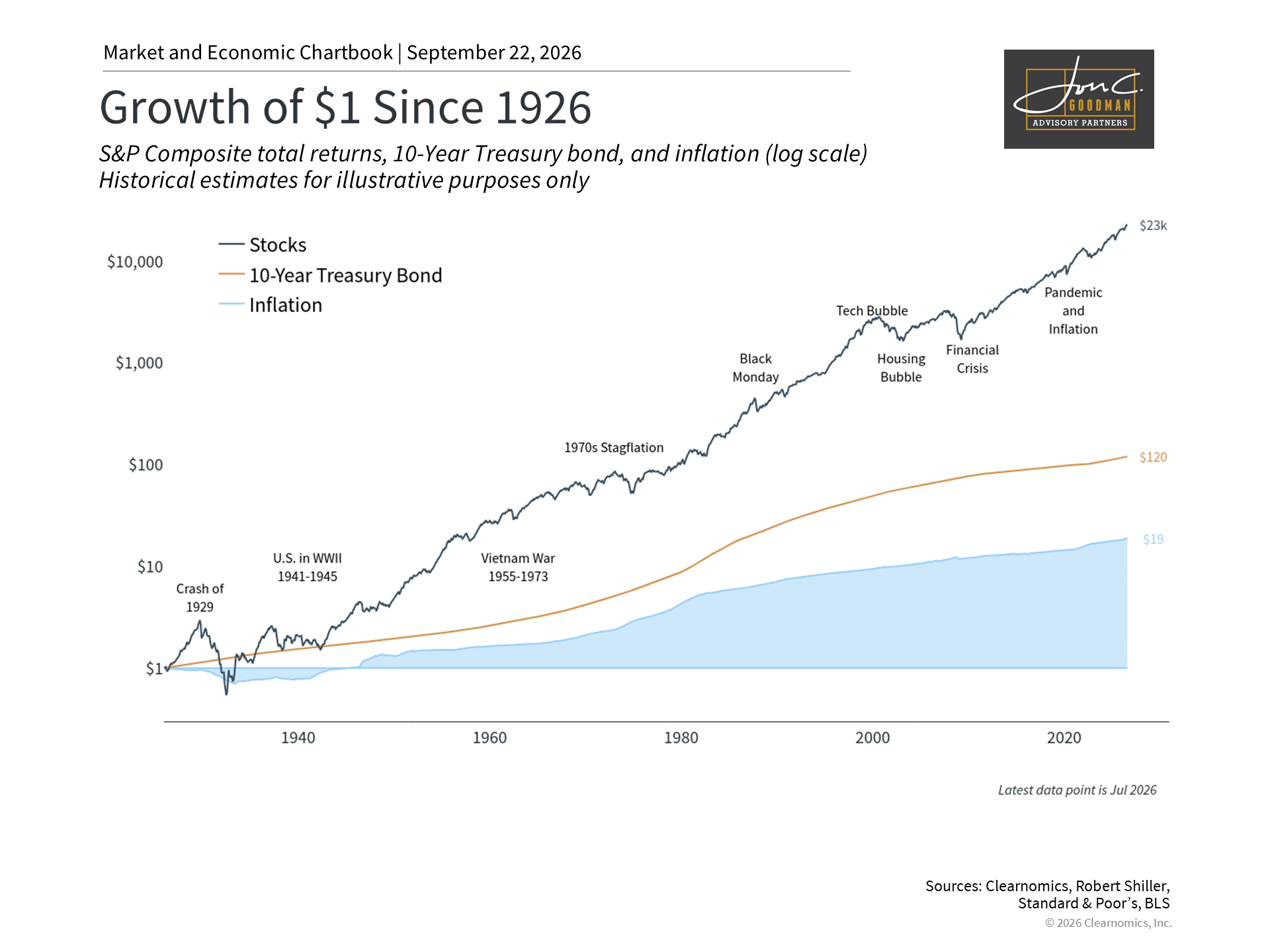
Remaining invested is the most effective long-term strategy for addressing inflation
Ultimately, investors pay close attention to Fed policy and interest rates because of the potential impact on their portfolios and financial plans. While the Fed commands significant attention, its decisions represent only one piece of a much larger picture.
The accompanying chart illustrates how financial markets have supported investors over the past century through countless Fed decisions, economic shocks, recessions, geopolitical challenges, and other significant events. Throughout this period, inflation pushed costs higher by 19 times, meaning that what once cost $1 in 1926 now costs $19. Despite this, both stocks and bonds significantly outpaced inflation over the long run. For those who remained invested, this helped portfolios generate income and build wealth over time.5
Of course, markets do not move in straight lines, and investors should always be prepared for periods of uncertainty. This is precisely why maintaining a portfolio that reflects long-term financial goals remains far more important than attempting to predict or time the Fed’s next move.
The bottom line? The Fed’s latest rate hike reflects inflation driven by higher oil prices. Investors are best served by focusing on long-term goals and maintaining balanced portfolios rather than reacting to each Fed decision.
References
- https://www.federalreserve.gov/newsevents/speech/yellen20170303a.htm
- https://www.federalreserve.gov/monetarypolicy/files/monetary20260916a1.pdf
- https://www.federalreserve.gov/newsevents/speech/warsh20260828a.htm
- Clearnomics research and CME Group data, as of September 16, 2026
- Clearnomics research using Bureau of Labor Statistics and Standard & Poor’s data, as of September 18, 2026

Wellness Navigator, Brain and Metabolic Health Coach, Christine Despres, RN, NBC-HWC, CDP
Three People I Can’t Stop Thinking About on World Alzheimer’s Day
Today is World Alzheimer’s Day, and there are some VIP’s I can’t stop thinking about. I know each of them from a different place in my life.
If you’re living with Alzheimer’s
As a nurse, I see you. I spent thirty years at your bedside, and here is what I learned there: you are still you. Your memory is not the whole of who you are. Your opinions, your humor, your way of doing things are all here. And when the memories slip, the people around you will hold them for you.
If you’re caring for someone with it
The skipped meals, the endless appointments, watching someone you love slip a little further from you each day. People can sympathize, but until they’ve walked in your shoes they will never fully understand what you carry. You are the hero in this story, and today I want you to hear that from someone who gets it.
If you’re wondering, is that going to be me
As someone with a family history and a genetic risk factor, I’ve asked that question about myself. Most women only think of it in a whisper, as if saying it out loud might make it true. Here’s the answer out loud. The changes in the brain start twenty to thirty years before the symptoms. That’s not a threat. That’s a head start. The window for changing your lifestyle is wide open and what you do in your 40s and 50s is what you’ll lean on in your 70s and 80s. You get to start now.
Why I do this work
I’ve seen how this ends too many times. If there’s a chance for a better ending, I want to be part of that solution. That’s why I’m dedicating the second half of my career to protecting our greatest asset, the CEO of our life, because a better brain means a better life. Sharper thinking, steadier moods, more energy, valuable relationships and the confidence to stay fully in the life you love for as long as you live it.
Cognitive decline is one of the biggest fears we have about getting older. Letting that fear sit quietly in the back seat doesn’t make it go away. It just steals your joy along the way. Let’s be proactive together. Knowledge is power and action is what moves the needle.
That’s why I’ll be at the Walk to End Alzheimer’s here in Atlanta on October 31 with my team and I’d love to have you with us. If you’re local, come walk. If not, you can join as a virtual walker from wherever you are, or simply make a donation. Do what you can. It’s not too late to join or give, and every dollar goes to research, care and support for all three of these people.
Join or donate here: http://act.alz.org/goto/WalkOn
So today, and every day, we keep working to end this deadly disease. One person, one brain, one habit at a time.
With so much respect,
Christine

How Recent Rule Changes Make Grandparent-Owned 529s More Attractive
Nelson Mandela famously said that “education is the most powerful weapon which you can use to change the world.” For many families, supporting a child’s education is a core financial planning priority, yet the associated costs have risen sharply over the years. Grandparents frequently wish to contribute to their grandchildren’s education, in part because doing so creates a meaningful legacy that extends well beyond traditional gift-giving.
In the past, grandparents had to navigate a complex set of rules when making gifts to grandchildren to avoid unintended consequences, particularly around taxes and financial aid eligibility. Recent updates to federal financial aid rules, however, now exclude grandparent-owned 529 accounts from the student assets portion of the aid calculation. This eliminates a significant historical drawback of these accounts, making them a compelling option to revisit within a family’s broader education funding strategy.
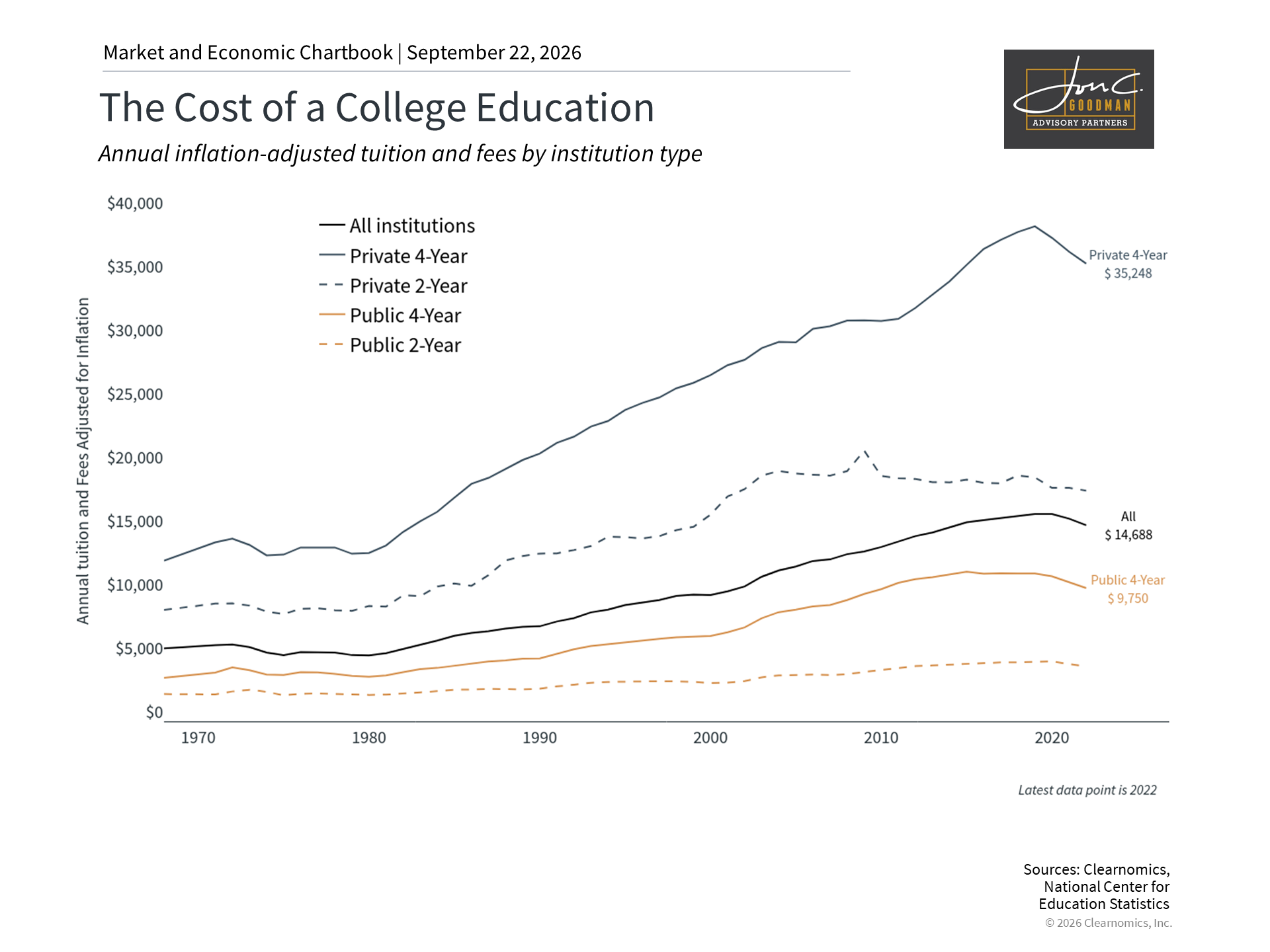
The rising cost of a college education
Enrolling in college is an exciting milestone, but it is also a significant source of financial pressure for many families. The cost of a college education has grown substantially, far outpacing general inflation over the past four decades. The accompanying chart illustrates average tuition and fees adjusted for inflation, sourced from the National Center for Education Statistics, going back to 1963. The data makes clear that these costs have increased rapidly, particularly at private 4-year institutions.
Tuition and fees represent just one piece of the financial picture. Families must also account for housing, meals, books, transportation, and other education-related costs, which now average more than $17,000 per year according to the College Board.1 These figures reinforce what most families already understand: starting to plan and save early is essential.
To manage these expenses, families often draw from a variety of sources, including parent and student income, personal savings, scholarships and grants, student loans, and financial contributions from relatives and friends. This is precisely the context in which grandparent-owned 529 accounts can offer meaningful support.
While parents frequently open 529 accounts on behalf of their children, grandparents have the option to open accounts for their grandchildren as well. This strategy was not always straightforward, however, because distributions from grandparent-owned 529 plans used to pay for college expenses were previously reported on the FAFSA form as student income.2
A recent update to how student assets are recognized has changed this calculation. Under the prior rules, student income, which is a component of the Student Aid Index (SAI), was factored in at a rate of 50%, and distributions from grandparent-owned 529 accounts were included in this component.3 While grandparent-owned 529 accounts are not the only vehicle available for contributing to a grandchild’s education, they are now exempt from this treatment.
Higher education as the foundation of a lasting legacy
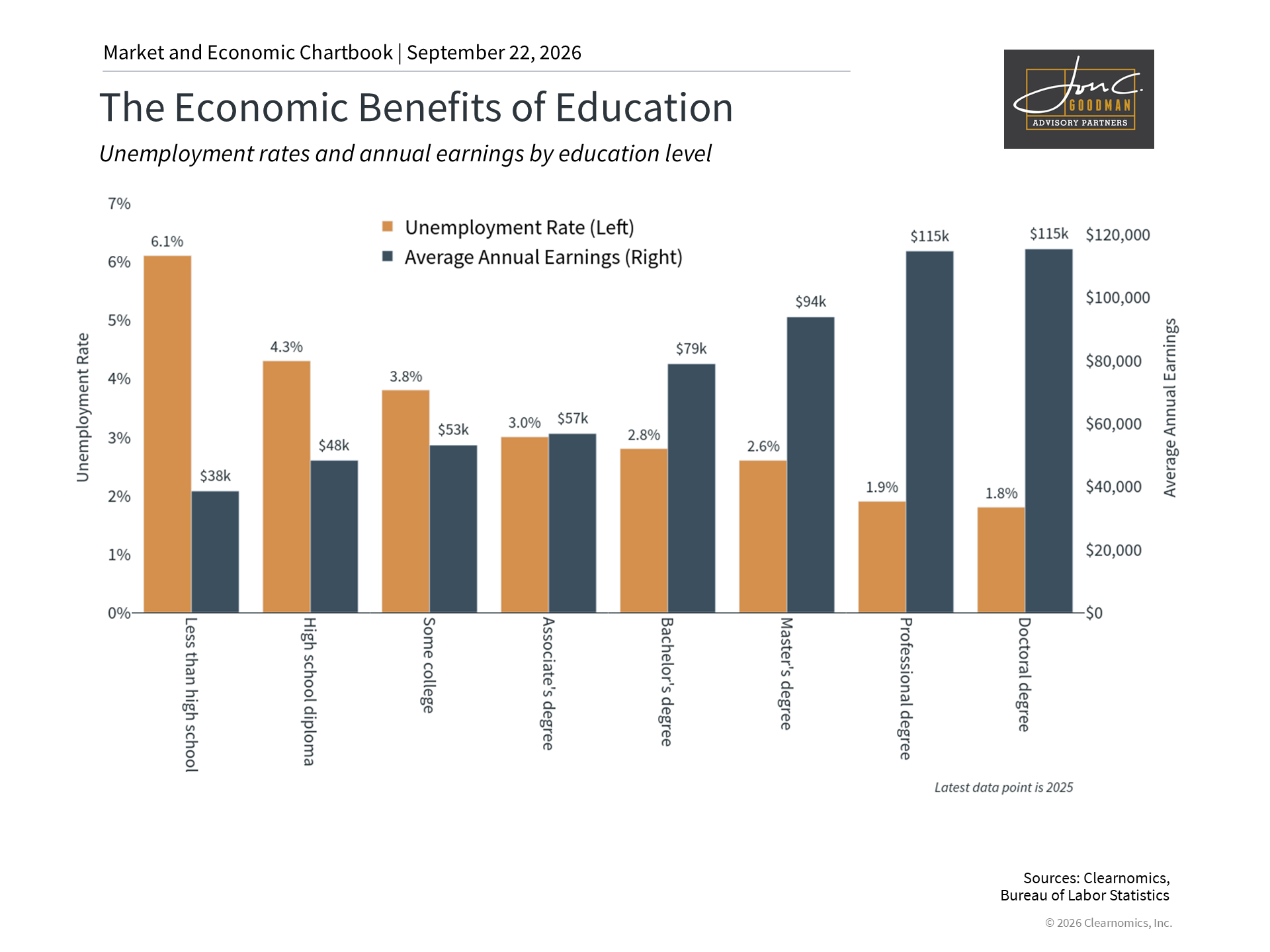
Despite the rising cost of college, the latest data from the Bureau of Labor Statistics indicates that the lifetime returns to education remain strong. Average earnings tend to increase with each additional level of educational attainment, while unemployment rates move in the opposite direction. For individuals with a high school diploma who did not attend college, the unemployment rate stands at 4.3%, roughly in line with the national average. Among those holding a bachelor’s degree, the average jobless rate falls to 2.8%, and for those with professional or doctoral degrees, it drops below 2%.4 Helping grandchildren prepare for future success is one compelling reason why funding their education can serve as a meaningful and enduring legacy.
One notable feature of grandparent-owned 529 accounts is that the account owner retains full control over the assets, including the timing of distributions and the ability to change the beneficiary to another qualifying family member or even to themselves. This flexibility matters because education plans can shift unexpectedly. A grandchild might receive a scholarship, choose a more affordable institution, or decide not to pursue a college degree. In such cases, families have several options for managing unused funds.
The SECURE 2.0 Act, for example, allows up to $35,000 to be rolled from a 529 account into the grandchild’s Roth IRA over their lifetime, free of taxes and penalties, provided certain conditions are met.5 One key requirement is that the savings account must have been held under the grandchild’s name for at least 15 years. It is important to note that annual Roth IRA contribution limits and earned income requirements still apply under this option.
Another option involves using up to $10,000 toward qualified federal or private student loan repayment. This can apply to the primary beneficiary or their siblings.6 Additionally, starting in 2026, grandparents may now withdraw up to $20,000 tax-free per grandchild each year for K-12 tuition costs.
529 accounts are subject to state-specific aggregate lifetime contribution limits, but they carry no annual contribution cap, which makes them appealing for both estate planning and gifting purposes. That said, limits do apply to tax-free gifting and to overall account balances as set by individual states. For 2026, a grandparent may gift up to $19,000 per grandchild per year without triggering federal gift tax reporting requirements.7
A grandparent who wishes to make a larger contribution has the option to front-load up to five years of gifts into a single contribution, amounting to as much as $95,000.8 A key advantage of this approach is that it allows the assets more time to grow on a tax-free basis.
Depending on their state of residence, grandparents may also receive an additional benefit.9 More than 30 states offer an income tax deduction or credit for qualifying 529 contributions. In most instances, this tax benefit is tied to using the taxpayer’s home-state plan, though nine states offer “tax parity,” which extends benefits to contributions made to any state’s plan.
Considered together, 529 accounts can serve as a valuable financial planning tool when used thoughtfully. This is particularly relevant given that a growing number of families are seeking tax-efficient strategies to help offset college costs and reduce reliance on student loans. Grandparents can play a meaningful role in that effort, and 529 plans offer a tax-advantaged way to do so. Of course, while contributing to a grandchild’s education is a generous gesture, any contributions should be weighed carefully against a grandparent’s own retirement needs and long-term financial objectives.
The bottom line? Grandparents can leave a lasting legacy for their grandchildren in many different ways, including grandparent-owned 529 accounts. With careful planning, they can strategically invest in their grandchildren’s future by helping with education costs using tax-efficient strategies.
References
- https://research.collegeboard.org/media/pdf/Trends-in-College-Pricing-and-Student-Aid-2025-final_1.pdf
- https://www.congress.gov/crs-product/R46909
- https://www.congress.gov/crs-product/R48835
- https://www.bls.gov/emp/
- https://www.congress.gov/crs_external_products/R/HTML/R42807.html
- https://www.irs.gov/taxtopics/tc313
- https://www.irs.gov/faqs/interest-dividends-other-types-of-income/gifts-inheritances/gifts-inheritances-1
- https://www.irs.gov/forms-pubs/about-form-709
- https://www.irs.gov/newsroom/tax-benefits-for-education-information-center