

Greetings!
There’s no shortage of things to worry about these days.
Interest rates. Oil prices. Elections. AI. Our health. Our families. Our futures.
Which makes this week’s Parting Thought especially timely: “Worry is a misuse of your imagination.”
I love that. Not because there aren’t things worth being concerned about, but because there’s a difference between concern that moves us to wise action and worry that simply keeps us up at night. That idea runs quietly through this week’s Advice for the Good Life.
In Wealth Advisory, we look back at an eventful third quarter. Stocks finished near record highs even as rates climbed, oil pushed above $100, and the Fed raised rates for the first time in three years. Throw in midterms and AI, and there’s plenty for investors to ponder. We’ll sort through what matters—and why a balanced portfolio remains one of our best defenses against an unknowable future.
In Wellness Navigator, Christine explores another kind of uncertainty: what happens to our brains as hormones change. For Menopause Awareness Month, she looks at estrogen’s important role in memory, mood, focus and sleep—and some simple habits that can help. Gentlemen, don’t skip this one: she has a word for us, too.
Finally, in Parting Thought, we return to worry and the curious fact that both fear and hope ask us to imagine a future that hasn’t happened yet.
Perhaps the trick isn’t to stop thinking about tomorrow. It’s to imagine it well, prepare wisely—and then get back to living today.
As always, I hope you’ll enjoy this week’s issue, share it with someone who might benefit, and subscribe if Advice for the Good Life found its way to you through a friend.
Thanks, as always, for reading along.
All for One, One for All,
Jon
Principal, JCG Advisory Partners | Montana’s First Certified Private Wealth Advisor® Professional | Guide for the Good Life

Wealth Advisory: Stocks Near Highs, Oil Above $100, a Fed Rate Hike—Your Quarterly Outlook for Shifting Markets
The third quarter presented a mixed picture for investors, shaped by two significant forces. Interest rates climbed to 20-year highs, while strong corporate earnings continued to underpin equity markets. Against this backdrop, oil prices rose back above $100 per barrel, the Fed raised rates for the first time in three years, and concerns about AI intensified as the November midterm election draws closer.
In spite of these developments, major U.S. stock market indices closed the quarter near their all-time highs. Equally noteworthy, these gains were not confined to one corner of the market. The energy sector, developed market equities, and commodities all made positive contributions to portfolios during the quarter. And although the bond market has faced headwinds from rising rates, bond yields are currently at some of their most attractive levels in recent memory.
These market dynamics serve as a reminder that maintaining a balanced portfolio is essential for navigating shifting market conditions, particularly when those conditions create opportunities for long-term investing and financial planning. With this in mind, how can investors keep their footing as these trends continue into the fourth quarter?
Key market and economic highlights for Q3 20261
- The S&P 500 returned 2.3% in the third quarter with dividends and the Nasdaq Composite gained 2.6%, while the Dow Jones Industrial Average declined -2.3%. Year-to-date, the three indices have returned 12.7%, 16.1%, and 7.2%, respectively.
- Developed market international stocks (MSCI EAFE) gained 0.9%, while emerging market stocks (MSCI EM) declined -0.4% over the quarter, both in U.S. dollar terms.
- The Bloomberg U.S. Aggregate Bond Index fell -3.5% in the third quarter for a year-to-date decline of -2.9%, with longer-dated bonds struggling. The 10-year Treasury yield climbed to 5.29%, a two-decade high.
- The Bloomberg Commodity Index jumped 15.1% over the quarter. Brent crude ended the quarter at $103 per barrel while WTI finished at $90.
- Gold fell further to $4,156 per ounce, while the U.S. Dollar Index recovered to 101.45.
- August headline Consumer Price Index (CPI) rose 3.4% year-over-year, while core CPI, which excludes volatile food and energy prices, increased only 2.4%. The core Personal Consumption Expenditures (PCE) price index, the Fed’s preferred measure of underlying inflation, rose 3.0% year-over-year in August.
- The Federal Reserve raised its key policy rate to a range of 3.75% to 4.00% in September.
- The third estimate of second quarter Gross Domestic Product (GDP) showed that growth was better than expected at 2.2% quarter-over-quarter. This was primarily driven by a 2.5% gain in personal consumption expenditures.
Investors are adapting to a higher interest rate environment
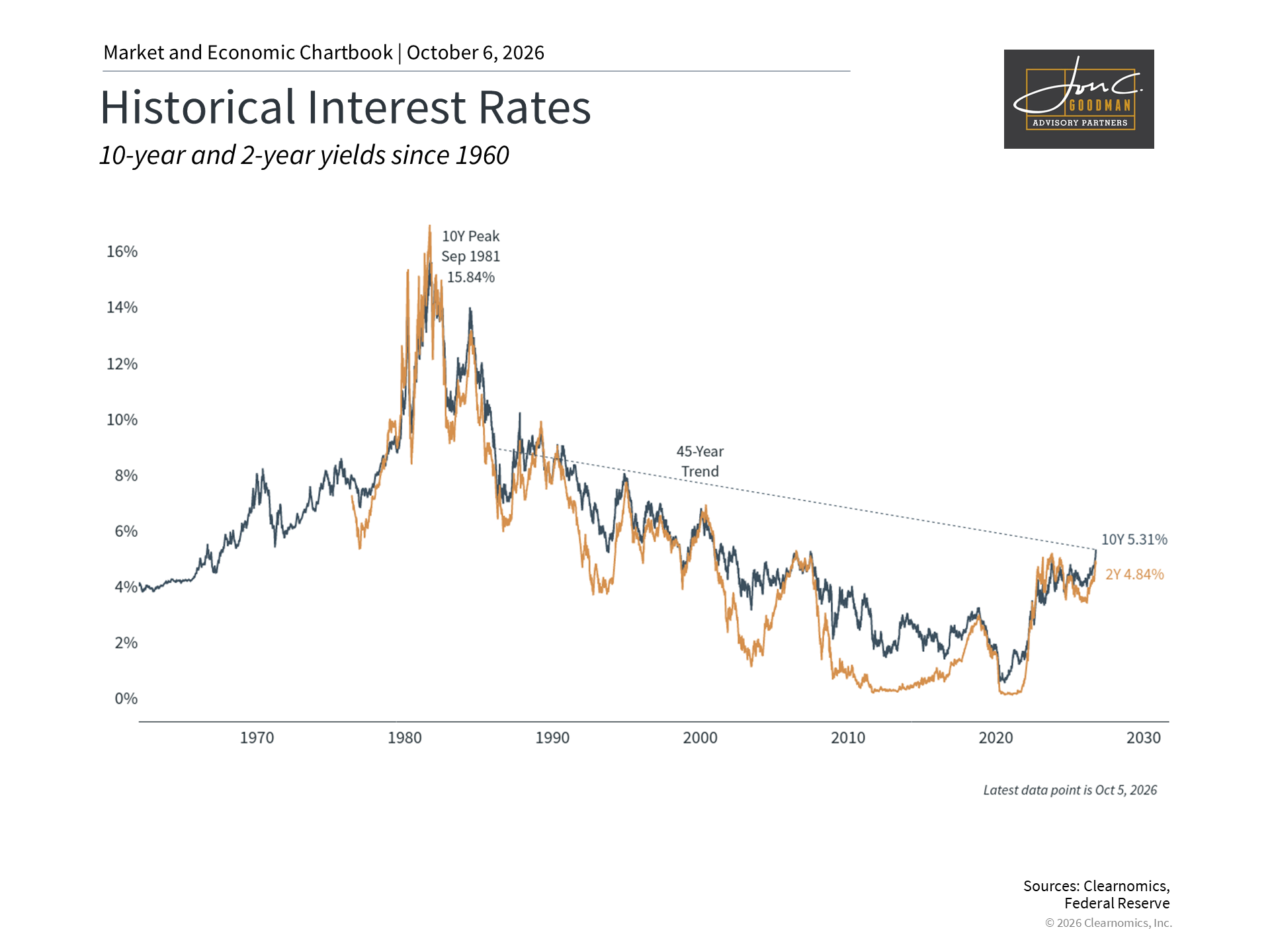
The most defining feature of the third quarter was the sustained rise in interest rates to levels not seen since the early 2000s. For long-term investors, this is significant because the low-rate environment that followed the 2008 global financial crisis is no longer the primary driver of portfolio decisions. The ability of bonds to generate more meaningful income today represents an important consideration in asset allocation.
Taking a historical perspective on interest rate trends is helpful. From the peak in the early 1980s through 2020, interest rates declined gradually but steadily, with shorter-term fluctuations driven by the business cycle and economic events.2 This era is often described as a 40-year bull market in bonds, as falling rates made existing bonds more attractive and helped support both portfolios and the broader economy.
High interest rates affect many parts of the economy beyond financial markets, with the housing market being a notable example. According to Freddie Mac, the average 30-year fixed-rate mortgage has moved back above 7% after dipping toward 6% at the start of the year.3 This contributes to what economists describe as the “lock-in” effect, where homeowners who locked in low rates in prior years have little incentive to sell, reducing overall housing market activity.
Of course, interest rates are difficult to forecast and can shift quickly, particularly given the uncertainty surrounding oil prices and the labor market. Nevertheless, rates remain near multi-decade highs, which is a meaningful development for investors to consider.
Earnings growth and AI investment are lifting multiple asset classes
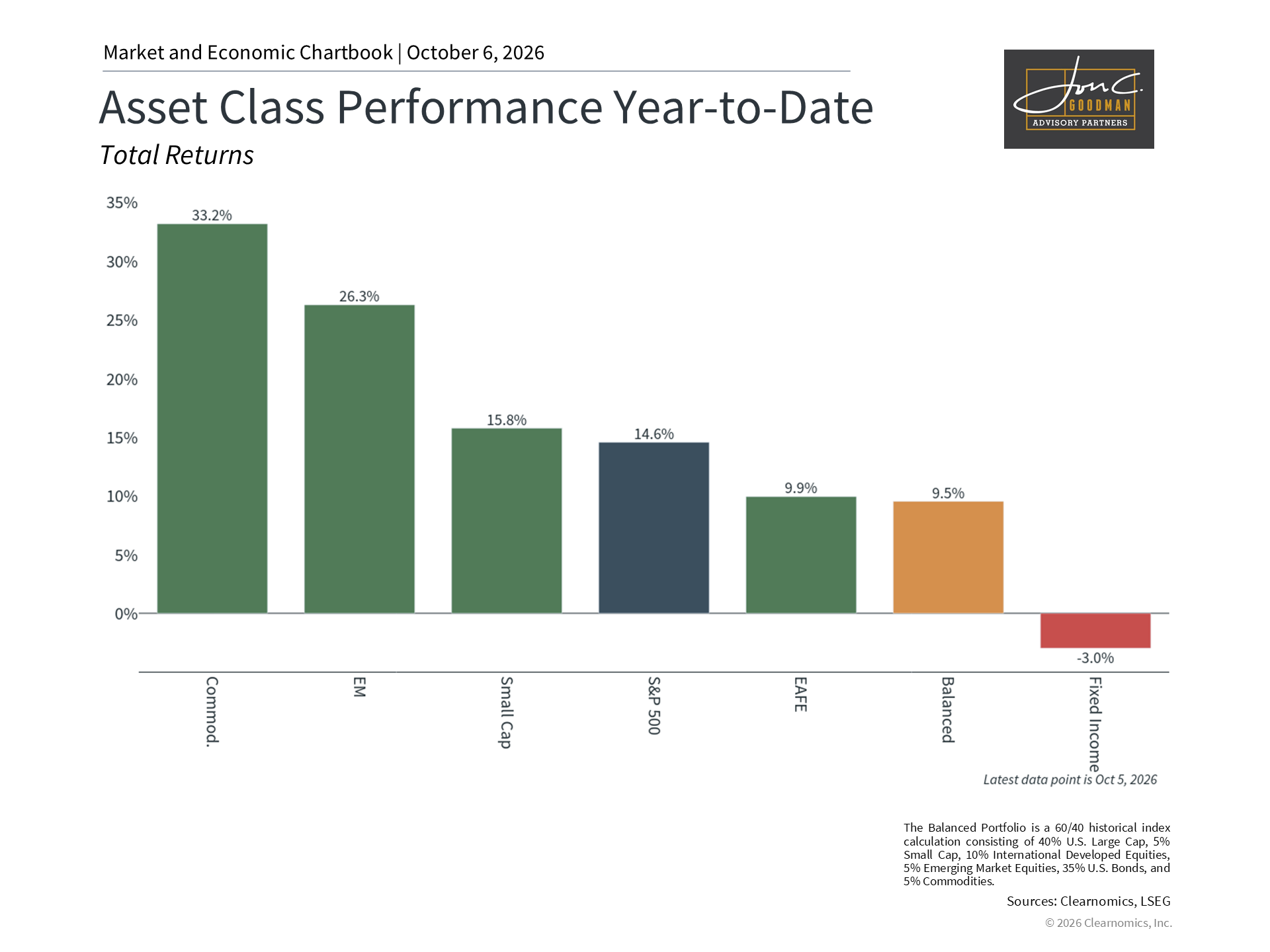
Despite recurring bouts of short-term uncertainty, the S&P 500, Nasdaq, and Dow Jones Industrial Average all achieved new all-time highs during the third quarter. This reflects the strength of the U.S. economy and the tailwind from trends such as AI infrastructure investment, which have bolstered corporate profitability. Current consensus estimates suggest that the S&P 500 could experience earnings growth across 2026 of over 30% for the next twelve months.4
This year’s positive performance has not been limited to U.S. large cap stocks. It has been a broader, global phenomenon across equity asset classes. Small cap stocks, for instance, faced pressure in the third quarter but have still outperformed year-to-date, in part because many of these companies play important roles in the AI supply chain. Other regions have also benefited from AI-related trends, particularly semiconductor companies in Asia, which has helped support the MSCI Emerging Market index, even though the third quarter saw a decline for this index.5
Commodities have also contributed to portfolio returns, though for different reasons. The ongoing conflict in the Middle East pushed oil prices from around $70 per barrel in early July to above $100 in September. Copper reached a new all-time high due to mine supply deficits and structural demand from AI infrastructure, while diesel reached a record due to heavily restricted global refining capacity.
The broad contribution from multiple asset classes underscores the value of a thoughtfully constructed asset allocation. This will only grow in importance heading into the fourth quarter, as questions around monetary policy, Treasury yields, and oil prices remain at the forefront.
The Fed’s first rate hike in three years
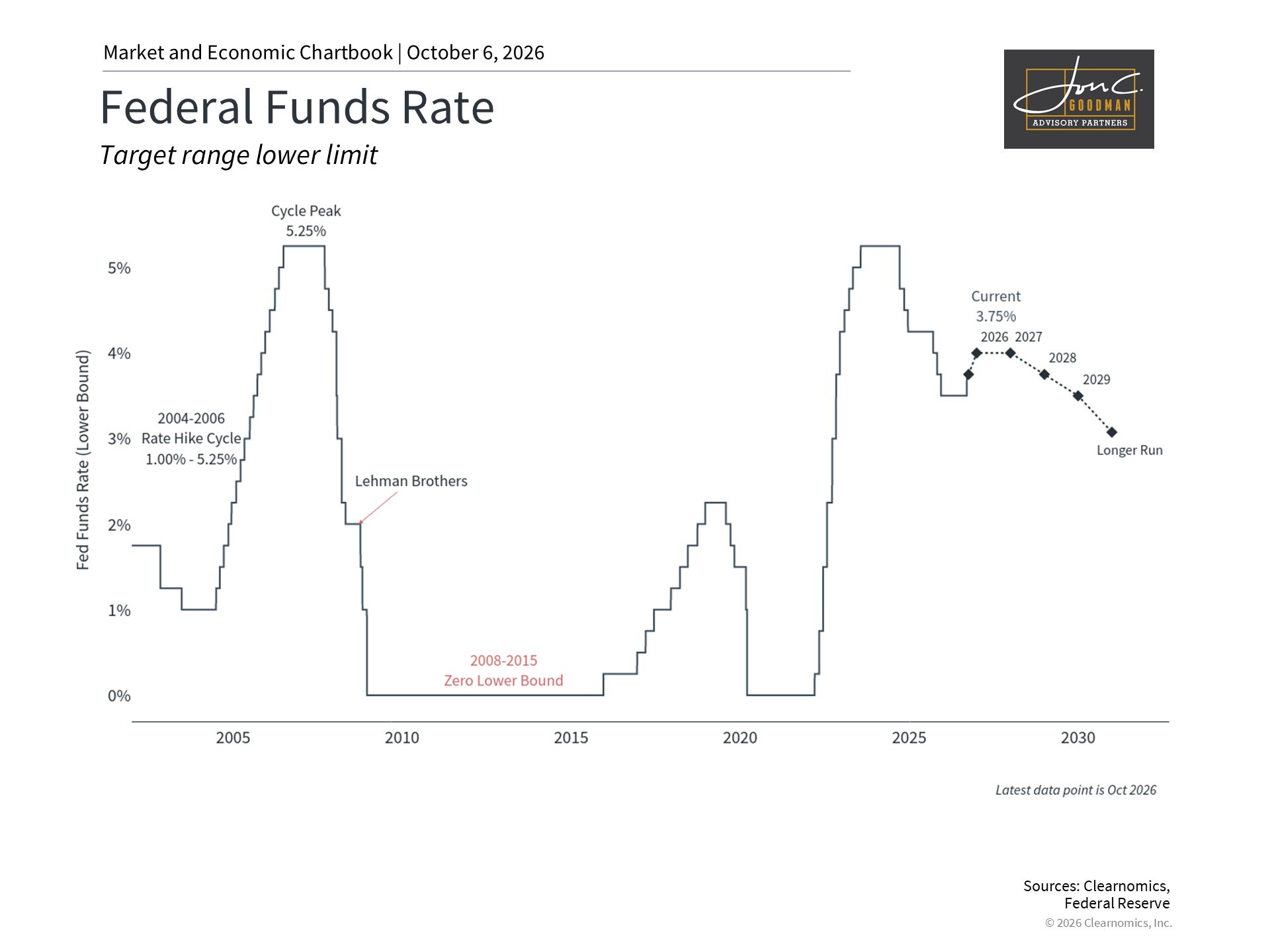
At its September meeting, the Fed raised policy rates by one-quarter of a percent to a range of 3.75% to 4.00%. This marked the first hike in three years, following a period of rate cuts that ran from September 2024 to December 2025, as illustrated in the chart above. Investors had already assigned the move a probability of over 90% heading into the meeting, so while there were some immediate market swings following the announcement, markets absorbed the move relatively well overall.6
What sets this hike apart is that the Fed is primarily responding to higher energy prices. Economists describe this as “cost-push inflation,” meaning that supply disruptions have driven prices higher. While the Fed cannot resolve geopolitical events through interest rate policy, it can work to prevent elevated energy costs from spreading to other inflation categories that affect consumers and businesses more broadly.
At present, projections from other Fed officials suggest the central bank may raise rates once more this year before pausing through 2027, with only a gradual decline in rates expected after that. These projections can shift quickly as economic conditions evolve, so they should be interpreted with appropriate caution.
It is natural for some investors to view tighter monetary policy as a headwind for markets. In practice, however, the outcome depends heavily on why the Fed is acting. Historically, it is not unusual for markets and interest rates to rise together, especially later in the business cycle when growth, corporate earnings, and capital investment are all strong. The third quarter offered a clear illustration of this, with major stock indices reaching new highs even as rates climbed. Of course, monetary policy is just one of the forces that will shape the months ahead, alongside the political calendar.
Midterm elections and the policy uncertainty they bring
As citizens, voters, and taxpayers, elections rank among the most consequential events in public life. They determine the direction of policy on issues such as entitlement programs, taxes, and the federal debt, and they reflect the values that guide new legislation. When it comes to investing, however, it is important for investors to avoid letting political views drive portfolio decisions.
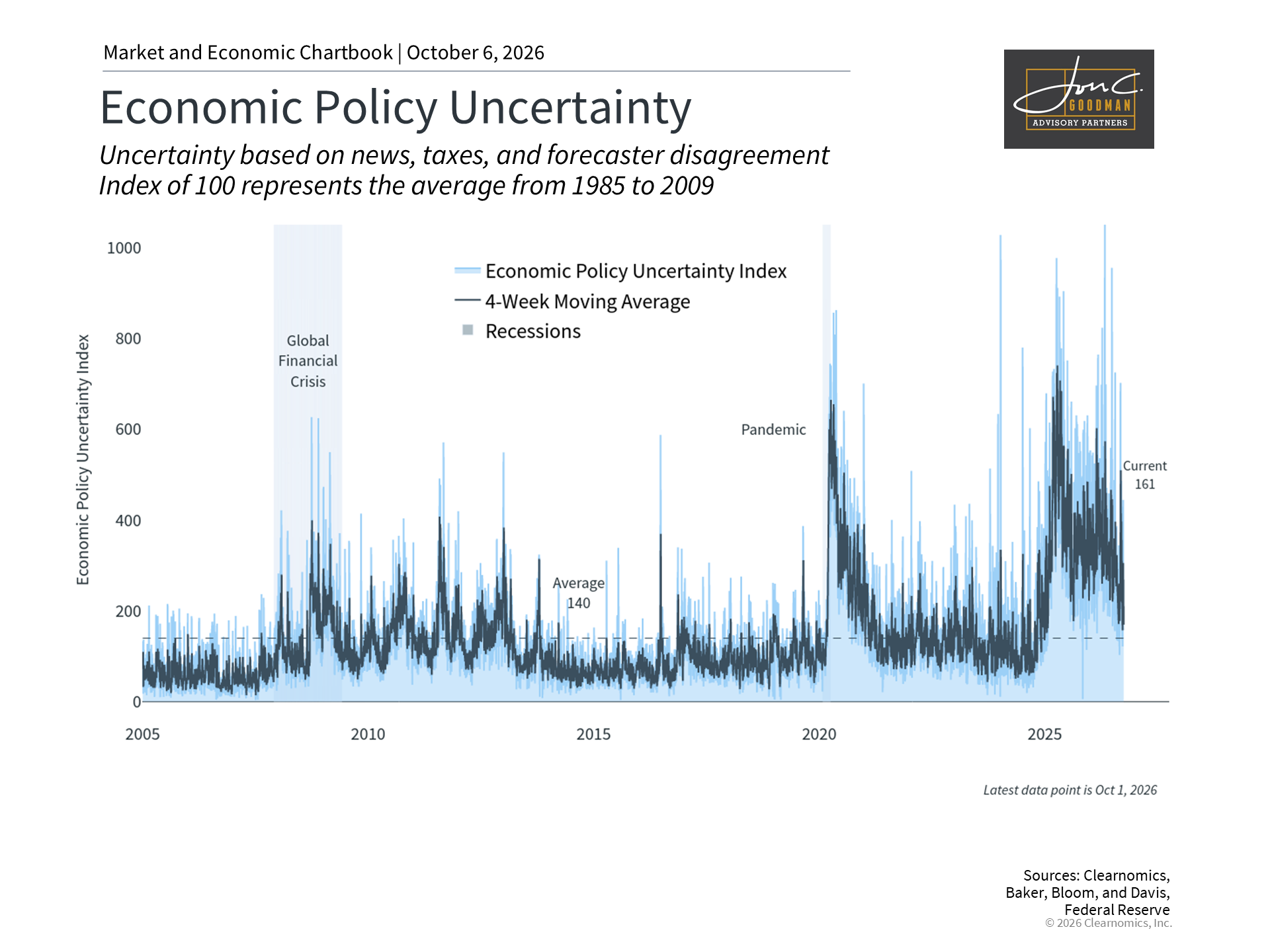
This year’s November midterm election is unfolding against a complex backdrop of tariffs, geopolitical conflict, inflation, and questions about AI. As the chart above illustrates, significant economic policy uncertainty over the past two years contributed to short-term market volatility. At the same time, markets have also demonstrated an ability to stabilize and recover in ways that can catch investors off guard. Past performance is no guarantee of future results, but this history reinforces the importance of not overreacting to short-term political headlines.
More broadly, it is tempting to assume that politics should be a primary driver of stock market performance, or that election years are inherently more volatile. History suggests otherwise. In fact, the S&P 500 has averaged annual total returns of 8.6% across midterm election years since 1933.7 Furthermore, markets have performed well on average across a variety of Congressional configurations. It is not uncommon for a sitting president’s party to lose its majority in Congress during a midterm election, as occurred under Biden, Trump’s first term, Obama, and Clinton, among other recent examples.8
Beyond questions of Congressional control, other sources of political uncertainty also weigh on investors. One area of particular concern is the size of the national debt and annual budget deficit. The total federal debt has recently surpassed $40 trillion for the first time, representing nearly $120,000 per American.9 The annual budget deficit is also projected to exceed $2 trillion for the government’s 2026 fiscal year.10 Over time, these trends could raise borrowing costs for the government and increase the interest payments it must make each year.
While many of these challenges are real and deserve attention, the key is distinguishing between what investors can and cannot control. Holding a portfolio designed to perform across a range of economic and political environments is far more important than attempting to predict the outcome of a single election or the precise level of next year’s budget deficit.
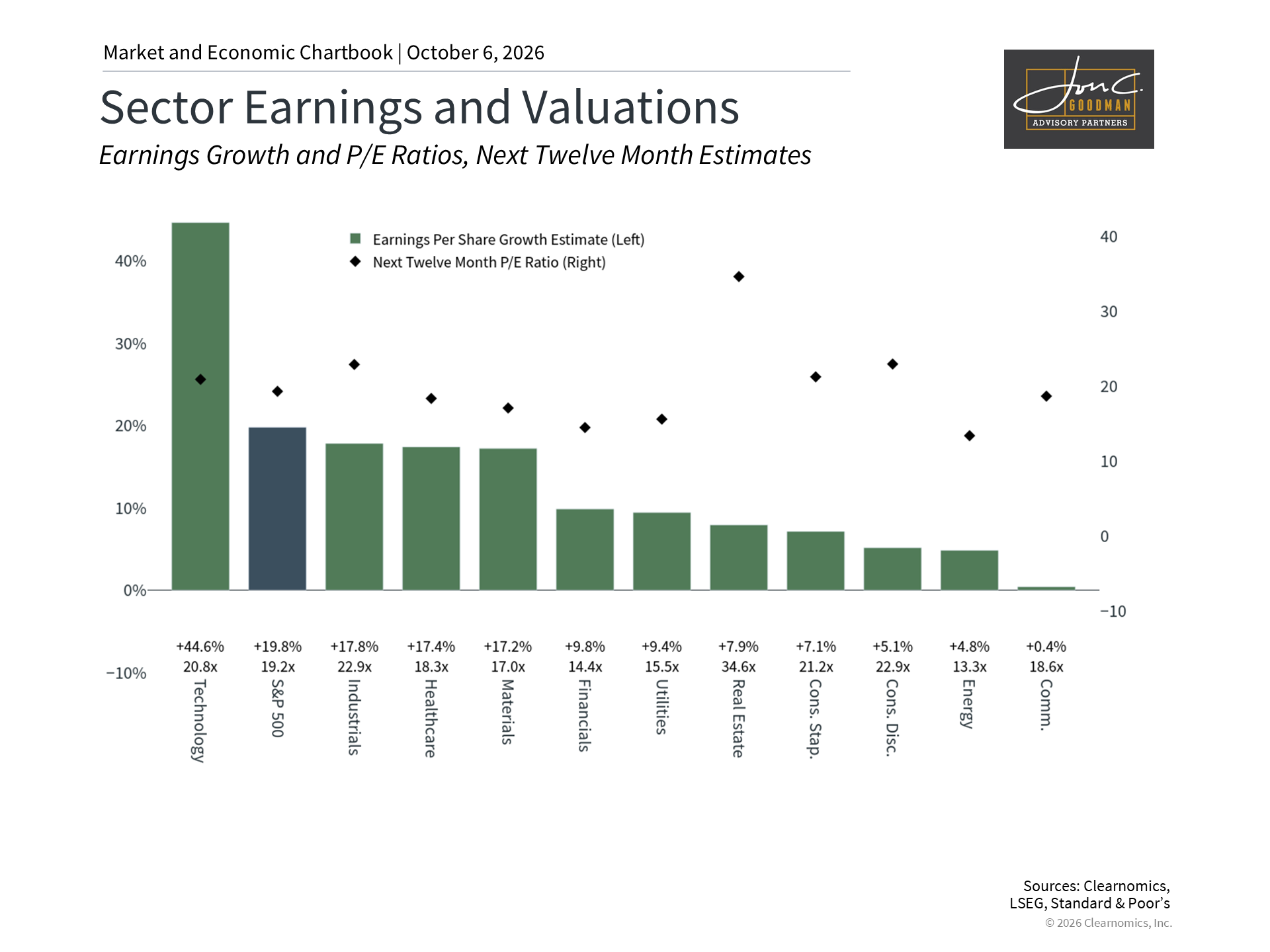
AI, productivity growth, and sector-level earnings trends
AI and broader technology trends have been among the most powerful forces shaping market performance over the past decade. These themes have not only driven returns for groups such as the Magnificent 7, but have directly influenced fundamental earnings trends across market sectors. The chart above highlights the difference in earnings growth between Information Technology and the other ten S&P 500 sectors.11
This degree of “concentration risk” is a concern for some investors who worry that market performance is increasingly dependent on just a handful of stocks. While many technology-related areas continue to perform well, it is also true that other sectors have contributed meaningfully to returns over the past year. These sectors are experiencing above-average earnings growth as well, which is helping to support their stock prices. The energy sector, for instance, has benefited from higher oil prices and is the top-performing sector with a 37.4% year-to-date gain through the third quarter.
Much of the growth linked to AI is tied to the build-out of infrastructure, including data centers. Perhaps the most important open question is whether AI will translate into genuine productivity gains across the broader economy. After all, the primary benefit of the information technology revolution and widespread internet adoption was a meaningful boost to productivity. So far, the 2020s have seen average productivity growth of 2.1% per year, compared to only 1.2% in the 2010s. Whether AI and other emerging technologies will sustain or accelerate this trend remains an open question, one that will likely influence both markets and the broader economy in the years ahead.
Given these dynamics, maintaining a longer-term perspective remains essential. Even the largest technology companies today took decades to reach their current scale, despite the considerable market enthusiasm that surrounded them in the 1990s. Understanding how AI-related trends interact with higher interest rates and the current Fed rate hike cycle can help investors remain focused and disciplined as the final quarter of the year unfolds.
The bottom line? Stocks reached new highs in the third quarter, with many asset classes contributing to portfolios, despite bonds struggling as interest rates rise. As new developments unfold and the midterm election approaches, investors should continue to stay balanced and focus on financial goals.
References
- Return figures represent total returns with reinvested dividends. All figures as of September 30, 2026
- Clearnomics research using Federal Reserve data, as of September 30, 2026
- https://www.freddiemac.com/pmms
- Clearnomics research using LSEG data, as of September 30, 2026
- Clearnomics research using FTSE Russell and MSCI data, as of September 30, 2026
- https://www.cmegroup.com/markets/interest-rates/cme-fedwatch-tool.html
- Clearnomics research using Standard & Poor’s data, as of September 30, 2026
- Clearnomics research using Standard & Poor’s data, as of September 30, 2026
- https://fiscaldata.treasury.gov/americas-finance-guide/national-debt/
- Clearnomics research using LSEG and Standard & Poor’s data, as of September 30, 2026
- https://fiscaldata.treasury.gov/americas-finance-guide/national-deficit/https://fiscaldata.treasury.gov/americas-finance-guide/national-debt/

Wellness Navigator: Brain Fog, Mood Swings, and Estrogen—What’s Going On?
When I say estrogen, you say… sex.
Go ahead, say it. Estrogen is classified as a sex hormone, and most of us learned about it alongside puberty, periods and babies, then never heard about it again until the hot flashes started.
October is Menopause Awareness Month, so let’s talk about what this transition means for your brain health.
Estrogen does play a role in desire and intimacy, but the endocrine system is so much more. It’s a network of glands, including your thyroid, adrenals and ovaries, sending hormones through your body as signals, with your brain directing the conversation. Estrogen has receptors in your brain, heart, bones, skin, gut and blood vessels. Its truest meaning is connection.
Your Brain Is One of Estrogen’s Biggest Fans
Estrogen helps your brain turn glucose into fuel and supports memory, mood, focus and sleep. When it starts to shift, your brain feels it first.
Welcome to the Wild Ride of Perimenopause
Estrogen rises and drops unpredictably, sometimes for years, and your brain keeps adjusting to a changing fuel supply. That’s why the brain fog, the word on the tip of your tongue, the 3 a.m. wake-ups and the anxiety out of nowhere tend to show up together.
Then You Reach the Pearly Gates
Twelve months since your last cycle and you’ve arrived at true menopause, the pearly gates right here on earth. The worst of perimenopause is behind you.
It doesn’t happen overnight, so give yourself some grace as your brain and body settle into your new norm. Research from neuroscientist Dr. Lisa Mosconi shows the brain does adapt, and for many women memory and focus can rebound. This is the doorway to your future self, where we get to shine. And if you walked through those gates years ago, this is your chapter too.
And gentlemen, don’t think you get out of this easily. Your hormones can get out of whack too. Testosterone tends to decline gradually with age, which can show up as low energy, poor sleep, mood changes and trouble focusing. The habits below apply to you too.
What Helps at Every Stage
There’s no magic pill. Everyone I work with starts by building a solid base, because that’s what everything else stands on. This is a huge part of what we do together.
- Balance your blood sugar by building every meal around protein, fiber and healthy fat, which gives your brain a steadier fuel supply
- Lift something heavy a few times a week, because as your hormones decline your bones and muscles need more support to stay strong
- Keep a symptom log of sleep, mood, energy and focus, so you start to recognize your triggers
If hormone therapy is on your mind, talk it through with your provider. Base first, targeted second.
Wherever you are on this road, book a free Brain Health Strategy Session at christinedespres.as.me and we’ll map your next step together.
One person, one brain, one habit at a time,
Christine
The Wellness Navigator | Brain & Metabolic Health Coach | RN, NBC-HWC, CDP
P.S. Curious what’s on my nightstand and in my kitchen? The books, tools and products I use and recommend are all in my wellness shop.
Parting Thought…
“Worry is a misuse of your imagination.”